

Every organisation in Ghana — from banks, hospitals and data centres to schools, warehouses, hotels and residential estates — has to answer one fundamental security question every single day: who is allowed in, where, and when? Relying on a security guard’s memory, a signing book at the gate, or a bunch of physical keys simply does not scale, and it leaves dangerous gaps that intruders and dishonest insiders can exploit. Access control replaces that uncertainty with a reliable, automated system that decides — and records — exactly who may enter each door, gate or system.
At Multiplex Systems, we design, supply and install access control solutions that protect people, premises and information across Ghana. This guide explains what access control is, how it works, the main models you can choose from, the credentials involved, and the practices that make a deployment succeed. Whether you are securing a single office or a multi-site operation, understanding these fundamentals will help you invest in the right system the first time and avoid costly rework later.
What is access control?
Access control is the selective restriction of entry to a place, system or resource — the discipline of granting the right people access to the right things while keeping everyone else out. In a physical setting it governs who can open a door, pass a turnstile or enter a server room; in a digital setting it governs who can log into a network, open a file or run an application. According to the United States National Institute of Standards and Technology (NIST), access control is one of the core pillars of any security programme, working hand in hand with identification and authentication.
Crucially, access control is not a single product but a system of working parts: credentials that identify a person, readers and controllers that process requests, software that stores the rules, and locks or barriers that physically enforce the decision. When these parts are configured correctly, access becomes effortless for authorised staff and effectively impossible for everyone else — all while a detailed log quietly records each event in the background for accountability.
Physical versus logical access control
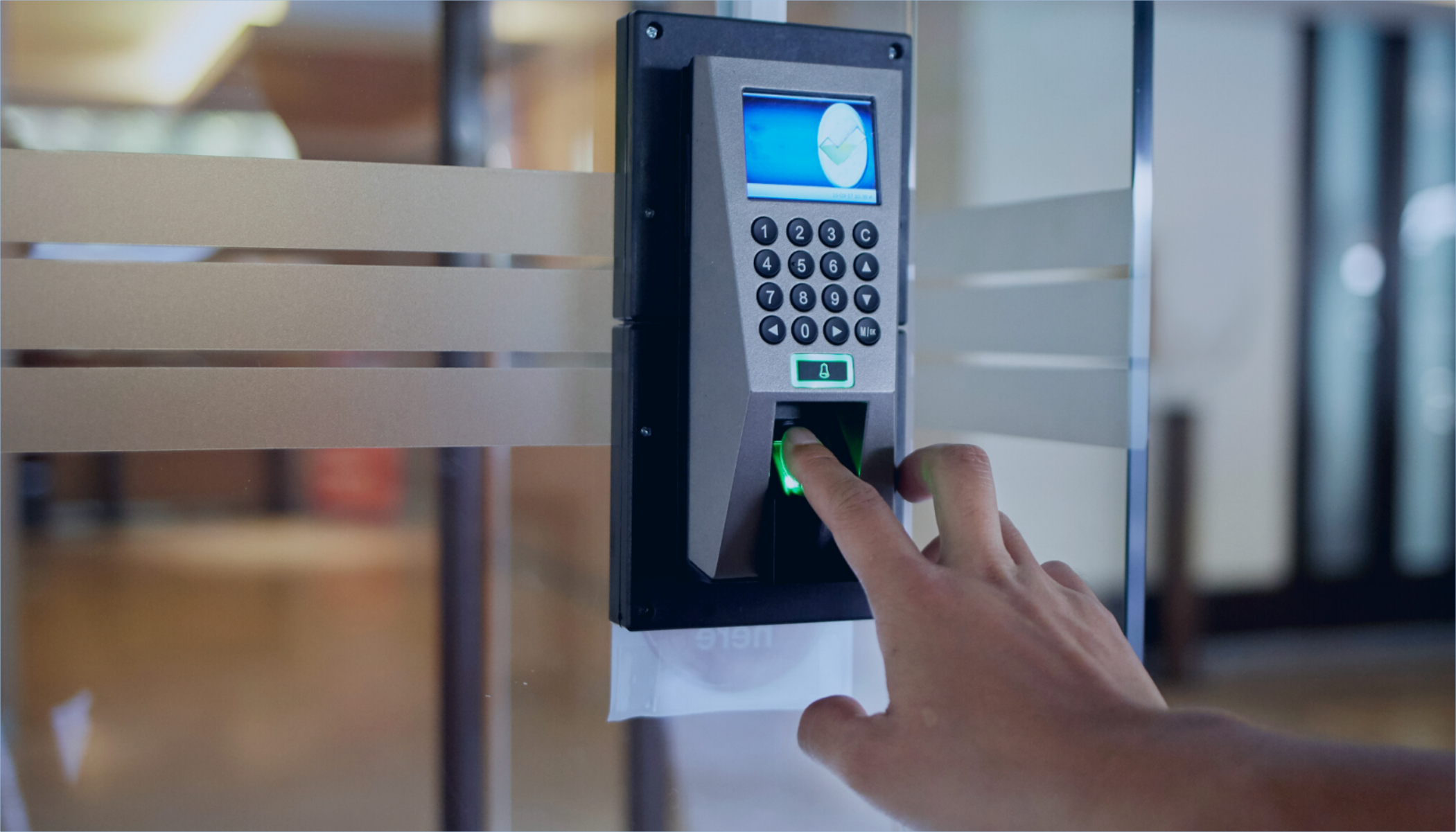
Physical access control secures tangible assets — gates, doors, rooms, cabinets and equipment — using credentials such as proximity cards, PIN keypads, fingerprints or facial recognition. It is what stops an unauthorised visitor from walking into a stockroom, a data centre, or a residential block, and it is the layer most people picture when they think of “access control”.
Logical access control, by contrast, secures networks, applications, files and data so that only authorised users and devices can connect. In modern businesses the two layers increasingly overlap — the same employee ID may open a door and unlock a laptop — which is why a coherent, centrally managed strategy matters. You can explore practical hardware for the physical layer on our online store, where card, PIN and biometric options are all available.
Why access control matters
The headline goal of access control is to reduce the risk of unauthorised access to both physical spaces and digital systems. A well-designed system protects sensitive areas — server rooms, cash offices, stores and records rooms — so they are reachable only by staff whose roles genuinely require it. Just as importantly, it produces a time-stamped audit trail of every entry and every attempt, which is invaluable when investigating an incident, resolving a dispute, or demonstrating compliance to auditors and insurers.
Beyond security, access control delivers real day-to-day savings and convenience. Lost keys no longer mean expensive lock changes across a building; a misplaced card or a departing employee’s fingerprint can be disabled in seconds from a central console. The system also makes it easy to enforce the principle of least privilege — giving each person access only to what their job requires — which is widely recognised as a foundation of good security practice.
The main access control models
Different organisations need different control philosophies, and choosing the right one shapes how easy your system is to manage as you grow. The four most widely used models are Mandatory Access Control (MAC), Discretionary Access Control (DAC), Role-Based Access Control (RBAC) and Attribute-Based Access Control (ABAC). Each strikes a different balance between central control, flexibility and administrative effort, so the best choice depends on the sensitivity of what you are protecting and the size of your team.
In most commercial environments, Role-Based Access Control is the practical sweet spot, because permissions follow the job rather than the individual. The main models compare as follows:
- Mandatory Access Control (MAC): a central authority sets permissions based on rigid security classifications — favoured by government and military settings.
- Discretionary Access Control (DAC): resource owners decide who may access their resources — flexible, but harder to govern at scale.
- Role-Based Access Control (RBAC): access is tied to a role such as “cashier” or “branch manager”, so it follows the job, not the person.
- Attribute-Based Access Control (ABAC): dynamic decisions based on attributes like user, device, location and time of day for fine-grained policies.
You can read a fuller technical comparison in this overview of access control models, and our team is happy to advise on which fits your premises during a free site assessment.
Credentials and authentication methods
A credential is simply the “key” a person presents to prove they are allowed in, and the strength of your whole system depends on how hard that credential is to copy or share. Traditional options include proximity cards and PIN codes, which are convenient and inexpensive but can be lost, lent or guessed. Biometric credentials — fingerprints and facial recognition — solve that problem by tying access to something the person physically is, rather than something they carry or remember.
For high-value areas, the gold standard is multi-factor authentication, which combines two or more factors — for example a card plus a PIN, or a fingerprint plus a card — so that a single compromised credential is not enough to gain entry. Choosing the right mix for each door is a balance between security and convenience, and it is exactly the kind of decision our engineers help you make when specifying a system.
How to roll out access control successfully
Technology alone does not make a building secure — implementation does. The most successful projects begin with mapping: before any hardware is chosen, walk the site and classify each area as public, staff-only or high-security, and decide which credentials suit each zone. High-value areas such as server rooms or cash offices warrant multi-factor authentication, while general staff entrances may need only a single credential for speed and convenience.
Once the system is live, the work shifts to disciplined administration. Provision each role with only the access it needs, and review permissions promptly whenever someone changes job or leaves the organisation — stale access is one of the most common causes of security breaches. Schedule regular reviews of the access logs so unusual activity is caught early, and keep the user experience simple, because a system that is awkward to use will be bypassed by the very staff it is meant to protect.
Common access control challenges
The biggest pitfalls we see in the field are stale permissions, credential fatigue and poor visibility across multiple sites. Former employees who retain working cards, contractors whose temporary access is never revoked, and shared PINs that everyone knows all quietly erode the protection a system is supposed to provide. As organisations adopt cloud services alongside on-premises systems, assets become more scattered and a single security “fence” around the building is no longer enough on its own.
Each of these challenges is solved by the same disciplines: centralised management, prompt de-provisioning when people leave, layered authentication for sensitive areas, and consistent reporting that gives you genuine visibility. Modern access control platforms make this achievable even for small teams, especially when the system is professionally configured from the start and paired with complementary CCTV and alarm systems for a complete security picture.
Access control for Ghanaian businesses
For organisations in Ghana, access control is fast becoming a baseline expectation rather than a luxury — driven by rising security awareness, insurance requirements and the simple need to protect valuable stock and equipment. The good news is that today’s systems scale to any budget: a small office can start with a single fingerprint door lock, while a multi-branch enterprise can run a unified, cloud-managed platform across every site from one dashboard.
What matters most locally is reliable installation and responsive after-sales support, because a security system is only as good as its uptime. That is where working with an established local provider pays off — you get hardware suited to local conditions, professional installation, staff training, and a team you can call when you need help, rather than a box shipped from overseas with no support behind it.
Secure your premises with Multiplex Systems
From fingerprint and card access control to full biometric, turnstile and integrated CCTV solutions, Multiplex Systems supplies, installs and supports access control for businesses across Ghana. We help you choose the right model for your premises, install it cleanly, train your team, and keep it running with responsive local support — so your security keeps pace as your organisation grows.
If you are planning a new building, upgrading an ageing lock-and-key setup, or tightening security after an incident, we can help. Browse our access control range or contact our team today for a free, no-obligation site assessment and a tailored recommendation that fits your needs and budget.